How many college students have ADHD?
About 5.6% of first-year, full-time students at US four-year nonprofit colleges report having ADHD, based on national freshman survey data from 2012 to 2019. That figure comes from Hotez and colleagues (Cureus, 2022), who analysed weighted responses representing about 7.7 million students. It is self-reported, so it counts students who say they have ADHD, not clinical assessments.
Older estimates land in a similar range. A review by DuPaul and colleagues (Journal of Attention Disorders, 2009) found roughly 2 to 8% of college students report clinically significant ADHD symptoms, and that at least a quarter of college students with disabilities have an ADHD diagnosis.
Roughly one student in eighteen. In a 200-seat lecture, that is about eleven people.
College students with ADHD: the statistics in one table
| Measure | With ADHD | Without | Source |
|---|---|---|---|
| Felt overwhelmed by all they had to do (past year) | 44.9% | 36.9% | Cureus, 2022 |
| Frequent feelings of depression (past year) | 21.6% | 11.0% | Cureus, 2022 |
| High school average of A or A+ | 12.9% | 28.9% | Cureus, 2022 |
| Creativity rated in top 10% | 25.5% | 16.2% | Cureus, 2022 |
| Drive to achieve rated in top 10% | 29.2% | 35.6% | Cureus, 2022 |
| Also reported a learning disability | 20.0% | 2.3% | Cureus, 2022 |
| College grades over four years | About half a grade lower with ADHD, every year | JCCAP, 2021 | |
First-year figures are self-reported by first-year, full-time students at four-year nonprofit colleges, 2012 to 2019 survey years.
What the four-year study found about grades and staying enrolled
The longest look we found is DuPaul and colleagues (Journal of Clinical Child & Adolescent Psychology, 2021). They followed more than 400 students at colleges in three states for four years, about half of them with ADHD. Students with ADHD averaged around half a grade lower in every year and were significantly less likely to stay enrolled across semesters.
The more useful part is what went with better outcomes: fewer depression symptoms, stronger executive functioning such as planning and time management, accommodations in high school, and use of college academic support services. Those are things a student can act on, which is more than most statistics offer.
The gap was steady, not growing. That points to day-to-day habits and support, not ability.
ADHD diagnosis in adults and children: the wider picture
- 6.0%of US adults, about 15.5 million, had a current ADHD diagnosis in late 2023. CDC MMWR, 2024
- 55.9%of those adults were first diagnosed at age 18 or older, which includes many people diagnosed during or after college. Same report.
- 71.5%of adults taking a prescribed stimulant reported trouble filling it because it was unavailable. Same report.
- 11.7%of US children aged 3 to 17, about 7 million, had a current diagnosis in 2024 parent-survey data. CDC ADHD data page, checked November 2026
On starting work in general, a large meta-analysis of procrastination by Steel (Psychological Bulletin, 2007) found it was most consistently linked to how unpleasant a task feels, how far away the payoff is, low confidence and impulsiveness. That applies to everyone, with or without ADHD, and it is the problem Now was built around.
This is general information, not medical advice. Talk to your clinician.
Proof: where Now fits in a study day
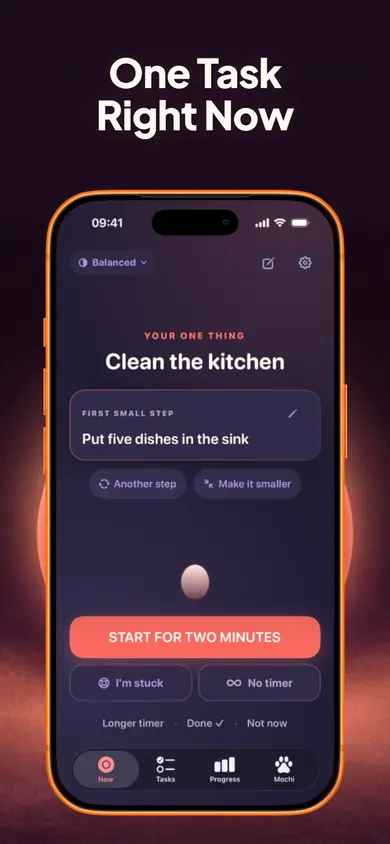
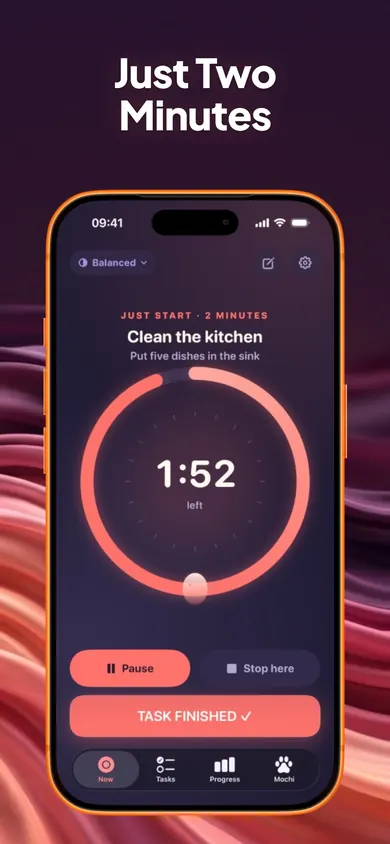
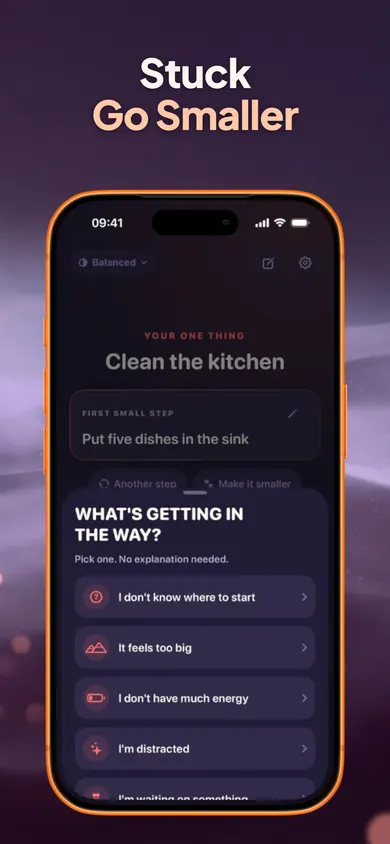
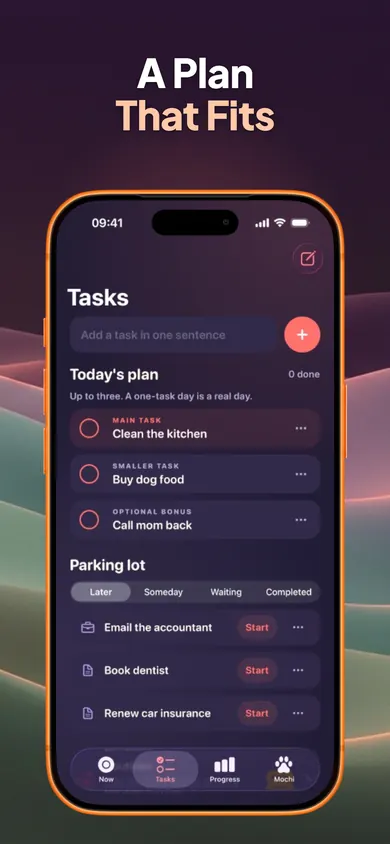
Now is a task starter. It does not do your reading; it gets you to page one.
Honest limits of these numbers, and of our app
- The first-year figures are self-reported and cross-sectional. They describe students who say they have ADHD, at one moment.
- The four-year study covered colleges in three states. Treat its findings as strong hints, not national rates.
- Now is a productivity tool. It does not diagnose, treat or manage ADHD, and it cannot replace accommodations or a clinician.
- Routines, full Time Mirror history and CSV export are Pro. The two-minute starter and Stuck button are free.
Questions about ADHD in college
What percentage of college students have ADHD?
Estimates depend on how ADHD is counted. In a national survey of first-year, full-time students at four-year nonprofit colleges, 5.6% reported ADHD (Hotez et al., Cureus, 2022). An earlier review put students reporting clinically significant symptoms at about 2 to 8% (DuPaul et al., Journal of Attention Disorders, 2009).
Do college students with ADHD get lower grades?
In a four-year study of more than 400 students, about half with ADHD, students with ADHD averaged about half a grade lower than peers in every year (DuPaul et al., Journal of Clinical Child & Adolescent Psychology, 2021).
Are students with ADHD more likely to drop out?
The same four-year study found students with ADHD were significantly less likely to stay enrolled across semesters. Better executive functioning, fewer depression symptoms and use of college academic support were linked to better outcomes.
What strengths do students with ADHD report?
In the 2022 national survey, more first-year students with ADHD rated themselves in the top 10% for creativity (25.5% vs 16.2%), risk-taking and artistic ability than students without ADHD.
How many adults are diagnosed with ADHD as adults?
A CDC survey found 6.0% of US adults, about 15.5 million, had a current ADHD diagnosis in late 2023, and 55.9% of them were first diagnosed at 18 or older (MMWR, 2024).
Can an app treat ADHD?
No. Now is a productivity tool for starting tasks. It does not diagnose, treat or manage ADHD or any medical condition. Talk to a clinician about diagnosis and treatment.
Is Now free for students?
The one-task screen, two-minute starter, Stuck button, task breakdown, Brain Dump, focus timers, daily plan, reminders, Quiet Mode and data export are free. Now Pro ($4.99 a month, $29.99 a year or $59.99 lifetime, US prices) adds routines, full Time Mirror history and insights, CSV export and Mochi customization.
Comparison strip: support that exists vs what Now does
Campus disability services
Formal accommodations such as extra exam time. Needs documentation. The four-year study linked academic support use to better outcomes.
A clinician
Diagnosis and treatment options. The only route on this list that addresses ADHD itself.
Now
The first two minutes of a task, on your phone, with no account. Free for the core features.
Play free on iPhone
Pick the reading you have been avoiding and give it two minutes. Now on the App Store.

Updated November 2026
Related
- Now: one task, one small step, two minutesNow shows one task, one concrete first step and a two-minute timer. Tap I'm stuck to go smaller. Free on iPhone, no account.
- How to start studying with ADHD: a two-minute checklistStuck staring at the syllabus? A short checklist for starting to study with ADHD: shrink the first step, set two minutes, pick what's in the way.
- ADHD time estimate calculator (your own multiplier)Enter three past tasks, guessed vs real minutes, and get your personal time multiplier, then a realistic start time. Free, runs in your browser.
- Why can't I start tasks I want to do?Wanting to do it and starting it are different skills. Tap what's in your way for one next move, then read 12 straight answers. No account needed.