What is the average attention span of a student?
There is no reliable average: the "10 to 15 minutes" figure traces back to a 1978 review of note-taking, and the "8 seconds" figure was never a measure of attention at all. What studies do show is that attention rises and dips throughout a class, and that what students do during it, like quizzing themselves or browsing, moves the needle far more than the clock.
Updated November 2026 · every source opened and checked in November 2026.
Seven research facts on student attention, as a conversation
The questions are the ones students ask us most. The answers are ours, with a link to each study.
Student
My professor says our attention runs out after ten minutes. Is that the actual average attention span of a student?
Us
1. The 10-to-15-minute rule has no solid source
A physiology professor chased the claim back through textbooks and found they lead to a 1978 review about note-taking, not attention (Bradbury, 2016, Advances in Physiology Education). The rule got repeated until it sounded measured.
Student
OK, but what about the 8-seconds thing? Everyone shares that one.
Us
2. The 8-second, goldfish figure was never an attention test
It came from a 2015 Microsoft Canada marketing report and describes how long people stayed on a web page before looking elsewhere. No one measured goldfish attention at all (Bradbury, 2016).
Student
So what does lecture attention actually look like?
Us
3. It rises first, then sags slowly
In a 1978 Lancet study, medical students rated their own attention every five minutes. It climbed over the first 10 to 20 minutes, then declined slowly without dropping below where it started. Differences tracked the lecturer more than the class (summarised in Bradbury, 2016).
Us
4. Lapses come and go all lecture long
Chemistry students clicked a button whenever they noticed a lapse. Attention alternated with lapses throughout the lecture rather than collapsing at one point, and the lapses they described, like texting and checking the clock, had nothing to do with lecture content (Bunce, Flens and Neiles, 2010, Journal of Chemical Education).
Student
Is there anything I can actually do about it?
Us
5. Testing yourself halves mind wandering
Students watching a recorded lecture who got short quizzes between segments mind-wandered on 19% of probes, versus 41% with no quizzes, took more notes, and scored 90% against 68% on the final test (Szpunar, Khan and Schacter, 2013, PNAS).
Us
6. Laptop multitasking costs you and your neighbour
Multitaskers scored 55% on a comprehension test against 66% for students who weren't multitasking. Students who could merely see a multitasking peer scored 56% against 73% (Sana, Weston and Cepeda, 2013, Computers & Education).
Us
7. In-class browsing predicted lower exam scores
Students who logged their laptop use averaged 37 minutes of non-class internet per lecture, and more of it predicted lower final exam scores, even after accounting for ACT scores and motivation (Ravizza, Uitvlugt and Fenn, 2017, Psychological Science).
Student
So it's less about a timer in my head and more about what I do with the time.
Us
That's the short version. Attention is a pattern you can influence, not a fixed battery.
How to use these facts in three steps
- Make questions while you listen. Every time the slide changes, write one question you could be tested on. That is the cheap version of fact 5.
- Close everything that isn't the class. Facts 6 and 7 are about tabs, not willpower. One window, notifications off, and sit where you can't see a browsing screen.
- Study in blocks, then check your baseline weekly. A 25-minute timer for review, plus a five-minute attention test once a week if you like numbers.
The fix for a drifting lecture is a question in your notebook, not a stronger battery.
Student attention span FAQ
How long can a college student pay attention in a lecture?
There is no reliable single number. A 2016 review traced the popular 10 to 15 minute figure to a 1978 review of note-taking, not attention, and found attention rises and falls through a lecture (Bradbury, 2016).
Is the 8-second attention span real?
No. The 8-second figure came from a 2015 marketing report and reflects how long people stayed on a web page, not a measured attention span, and nobody measured a goldfish (Bradbury, 2016).
What is the best way for students to stay focused in class?
Quiz yourself as you go. In a 2013 experiment, students given short tests between lecture segments reported mind wandering on 19% of probes, against 41% for students who weren't tested (Szpunar et al., 2013).
Does using a laptop in class hurt grades?
Off-task use does. Students who multitasked on a laptop scored about 11% lower on a comprehension test, and students who could see a multitasking classmate scored about 17% lower (Sana et al., 2013).
How long should a study session be?
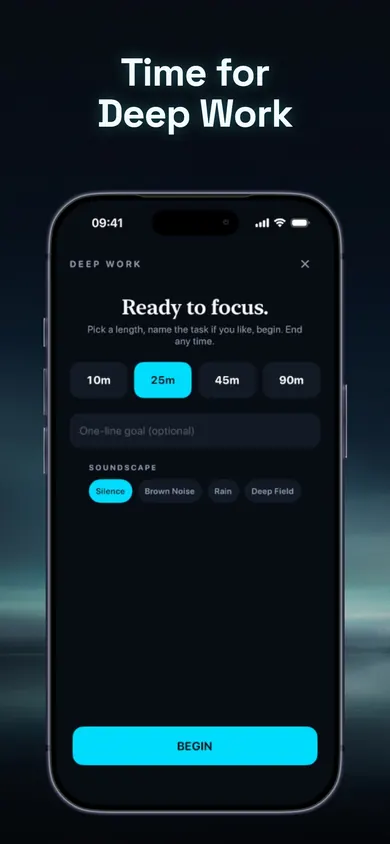
Research doesn't hand you a universal number. A practical start is a 25-minute block with the phone out of reach, then a short break. Attention Age's free Deep Work timer has 10 and 25-minute sessions.
Can Attention Age tell me if I have ADHD?
No. It is an entertainment and self-practice app, not a medical, clinical or diagnostic test. This is general information, not medical advice. Talk to your clinician or campus health service.
Honest limits of this roundup
- Most of these studies used university students in one country, often in a single course, so treat the numbers as directions, not laws for every classroom.
- Fact 7 is correlational: browsing and lower scores went together, which doesn't prove the browsing caused them.
- Facts 3 and 4 rely on students reporting their own attention, which is itself imperfect.
- Attention Age measures how you do on its own tasks on your device. Its Attention Index is not an age, a percentile or a ranking, and it is not a diagnostic test.
Attention span myths vs what the evidence says
| You heard | The evidence | Try instead |
|---|---|---|
| "Attention dies at 10 minutes" | No primary data; attention rises, then sags slowly | Re-engage yourself with a question every slide |
| "8 seconds, less than a goldfish" | A web-browsing figure, not an attention test | Ignore it; it isn't about you |
| "I can follow along and browse" | Multitaskers scored 55% vs 66% | One window during class |
| "Rereading notes is enough" | Quizzed students wandered less and scored higher | Self-test between topics |
Where Attention Age fits for students
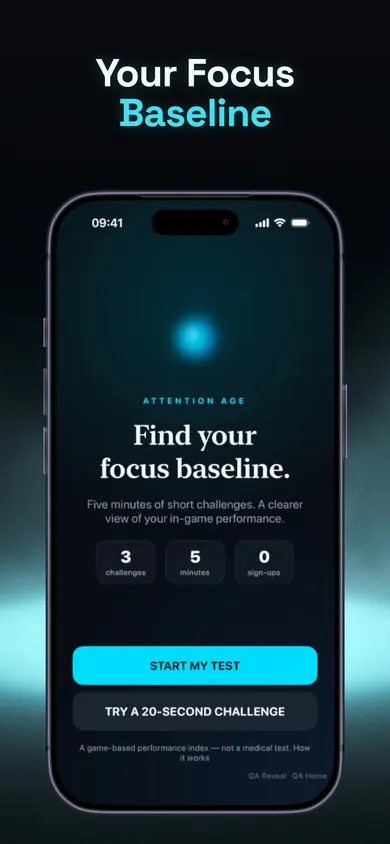
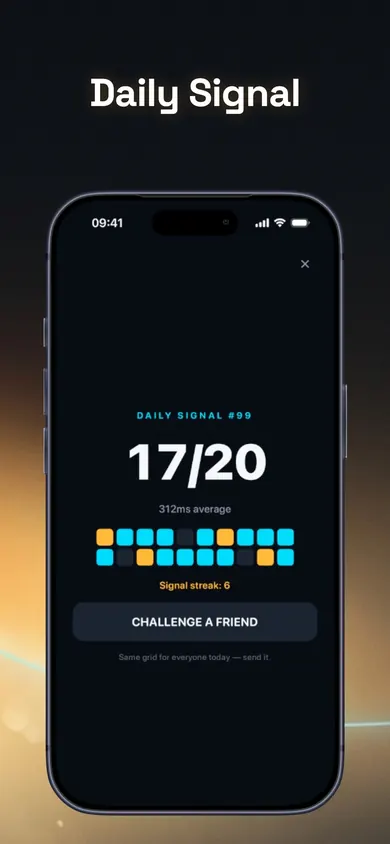
We make Attention Age. It won't change a lecture, but it gives you a five-minute baseline built from three timed tasks, a 20-second Daily Signal, and a focus timer for study blocks. No account, no ads, and results stay on your iPhone.
The answer key to the sort
- Holds up: short quizzes cut mind wandering (19% vs 41%).
- Holds up: a classmate's off-task laptop lowered scores (56% vs 73%).
- Holds up, with a caveat: in-class browsing went with lower exam scores (correlational).
- Myth: the 10-to-15-minute collapse.
- Myth: the 8-second, goldfish attention span.
One design decision we made: Attention Age's weekly re-test calls any change under 5 points "about the same", because students re-testing before exams deserve a straight answer, not a flattering one.
Who should pick something else: if you want help with course content, a flashcard or quiz app will do more for fact 5 than we can. If attention trouble is affecting your grades or daily life, start with your campus health service.
Get your five-minute baseline
Take it once now and once next week, same time of day. Open Attention Age in the App Store; the test and weekly re-tests are free, and Pro (monthly or annual) adds extra drills and longer focus sessions.

Related
- Attention Age: a five-minute attention span testA five-minute attention span test for iPhone: three timed tasks, a 0-100 Attention Index explained in plain language, then daily practice.
- Is my attention span getting shorter? Six myths checkedThe 8-second goldfish claim, the 10-minute lecture limit and four more attention myths, checked against the studies they came from.
- How to measure attention span improvement (6 mistakes to fix)Trying to improve your focus? Six common mistakes that fake or hide progress, how to fix each one, and a counter that reads your score change.
- New Year focus reset checklist (5 weeks, sortable)A five-week New Year focus reset checklist you sort by your worst distraction. Baseline test, phone rules, sleep and a fair re-test on January 4.