 A beginner's question, answered
Updated November 2026 · About a 6-minute read
What do brain games actually improve?
Brain games reliably improve your skill at the games you play and, to a lesser degree, at very similar tasks; good evidence that they improve everyday memory, raise IQ or prevent dementia is still missing. That is the honest one-line answer, and it is what the largest independent review of the field concluded.
That review, by Simons and colleagues in Psychological Science in the Public Interest (2016), went through the studies cited by brain-training companies themselves. The authors found extensive evidence that training improves performance on the trained tasks, less evidence for closely related tasks, and little evidence that training improves everyday cognitive performance.
An earlier experiment made the same point at scale. Owen and colleagues in Nature (2010) had 11,430 people train online for six weeks. They got better at the tasks they practised, but the researchers found no transfer to untrained tasks, even ones that used similar thinking skills.
Near transfer vs far transfer
Researchers sort the question into two kinds of improvement. The distinction is the key idea for any beginner, so here it is side by side.
| Kind of gain | Example | How solid? |
|---|---|---|
| The trained game | Your mental change-making round gets faster | Strong |
| Near transfer | A different change-making puzzle feels easier | Some |
| Far transfer | You remember appointments without a calendar | Weak |
| General intelligence | Your IQ score rises | Not supported |
| Long-term brain health | Lower dementia risk | Not shown |
Practice makes you better at what you practise. The further a skill sits from the game, the thinner the evidence gets.
What about older adults and the ACTIVE study?
The best-known positive result comes from a large trial called ACTIVE, which taught older adults memory, reasoning or speed-of-processing strategies in sessions with trainers. According to the National Institute on Aging (reviewed 2024), people trained in reasoning and speed of processing showed less decline in those abilities over ten years than the memory and control groups. NIA calls cognitive training promising for maintaining cognitive health.
The same NIA page adds two warnings that apply to every app, ours included. It says to beware of claims that computer and online games can improve memory and thinking, and that there is not enough evidence that commercial brain-training apps match the effects seen in ACTIVE.
Honest limits of SkillArena
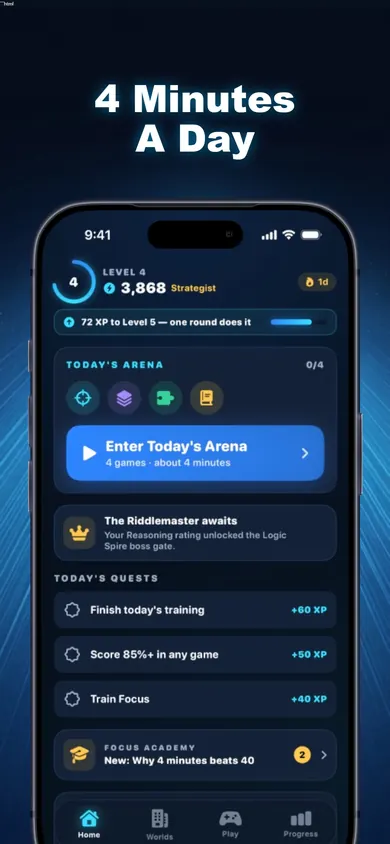
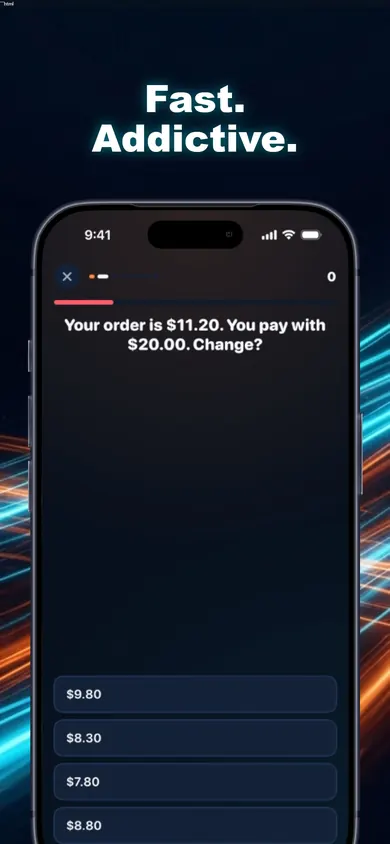
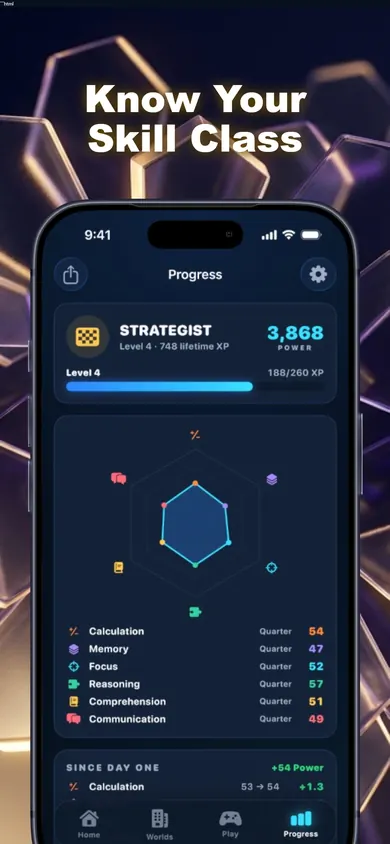
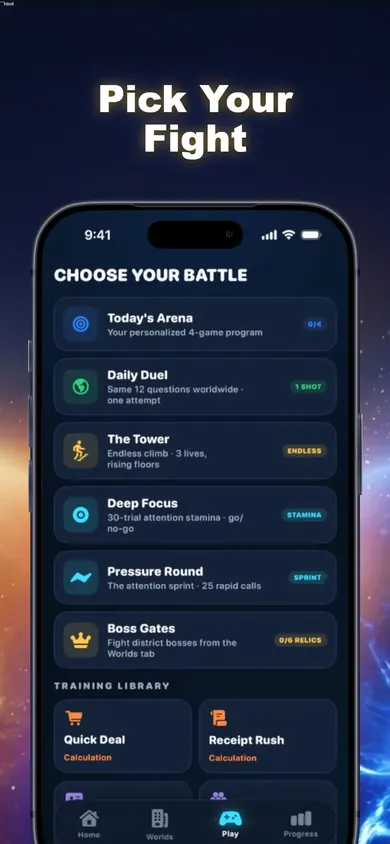
We make SkillArena, so here is what it can and cannot promise. It is a game: a four-minute Daily Arena of four short rounds drawn from thirteen games across focus, memory, reasoning, numbers, careful reading and clear wording. Its ratings, 1 to 100 per category, describe how you play those games. They are not an IQ score and not a medical, psychological or clinical assessment, as the App Store listing says.
A design decision we made because of the evidence above: the Progress tab shows exactly how each rating is calculated. If a number moves, you can see why, and you will not be told it means more than it does.
Another limit worth knowing: questions are generated fresh, so rounds do not repeat word for word. That keeps you from memorising answers, but it does not turn game practice into far transfer.
Brain games FAQ for beginners
Do brain games make you smarter?
There is no good evidence that brain games raise IQ or general intelligence. The large review by Simons and colleagues in Psychological Science in the Public Interest (2016) found that training reliably improves the trained tasks, with little convincing evidence of broad gains.
Can brain games prevent dementia?
That has not been shown. NIA (2024) notes it is funding a trial to test whether one specific kind of speed training can reduce cognitive impairment and dementia, which tells you the question is still open.
What is near transfer vs far transfer?
Near transfer is getting better at tasks that closely resemble the one you practised. Far transfer is getting better at something quite different, like everyday memory or school grades. Near transfer is common; far transfer is the part the evidence struggles to support.
So are brain games a waste of time?
Not if you enjoy them. A few minutes of a game you like is a fine way to spend a coffee break, and watching a rating move is satisfying. Just choose them for the fun and the practice, not for medical promises.
How long should a beginner play each day?
There is no proven ideal dose. Short is easier to keep up: SkillArena's Daily Arena is about four minutes, with Quick (about 2) and Extended (about 8) options.
What does SkillArena's rating measure?
Your performance in SkillArena's own games, on a 1 to 100 scale per category. The listing is explicit that ratings are not an IQ score or a medical, psychological or clinical assessment.
Who should skip brain games
- Anyone worried about memory changes. See a doctor; a game cannot assess or treat that.
- Students cramming for exams. Practise the subject itself, with self-testing and spaced review.
- People who want a guaranteed result. No brain game, ours included, has evidence for big everyday gains.
Who it suits: beginners who want a short, varied, honest daily game and enjoy watching a personal best move.
What SkillArena looks like
Play for the fun, measure it honestly
Free to download, no account, no ads, works offline. Start on your iPhone, or read the App Store listing.

Related
- SkillArena: four-minute focus training gamesFocus training games for iPhone: four short mixed games a day, adaptive difficulty, 13 games and a Tower to climb. Free, offline, no account.
- Best brain games for beginners: find your starting modeNew to brain games? Answer three questions and get a starting length, pace and first mode, with a live count of your weekly minutes. Free on iPhone.
- Brain games for commuters: a beginner's guide to a four-minute rideBrain games for commuters, for beginners: what fits a 10-minute train ride, what works offline in tunnels, and what to play on day one.
- A 24-day advent calendar brain challenge for adults (December 1 to 24)A free advent calendar brain challenge for adults: one short game a day from December 1 to 24, 2026, with a 24-door tracker ring.